Composer AI Assistant
Arc XP Composer includes a collaborative AI Assistant that helps journalists meet editorial standards by identifying gaps in metadata and ensuring adherence to style guides.
Context
Starting with editorial review, the AI Assistant in Composer helps ensure every story meets your newsroom’s standards—polishing metadata, refining style, and making editorial reviews smoother than ever by helping journalists identify and meet requirements even sooner.
- This is focused on an initial set of metadata fields as well as style guide suggestions that are placed in the story body.
- The AI Assistant has real-time presence indication and feedback so authors and editorial teams can see where AI is working and making changes to the draft.
- Additionally, the AI Assistant is built with control and visibility at the forefront so that even though direct changes can be made to the story draft, authors and editors have visibility into where all changes are made and are in control for reviewing before they are committed to the revision.
Metadata Review with AI Assistant
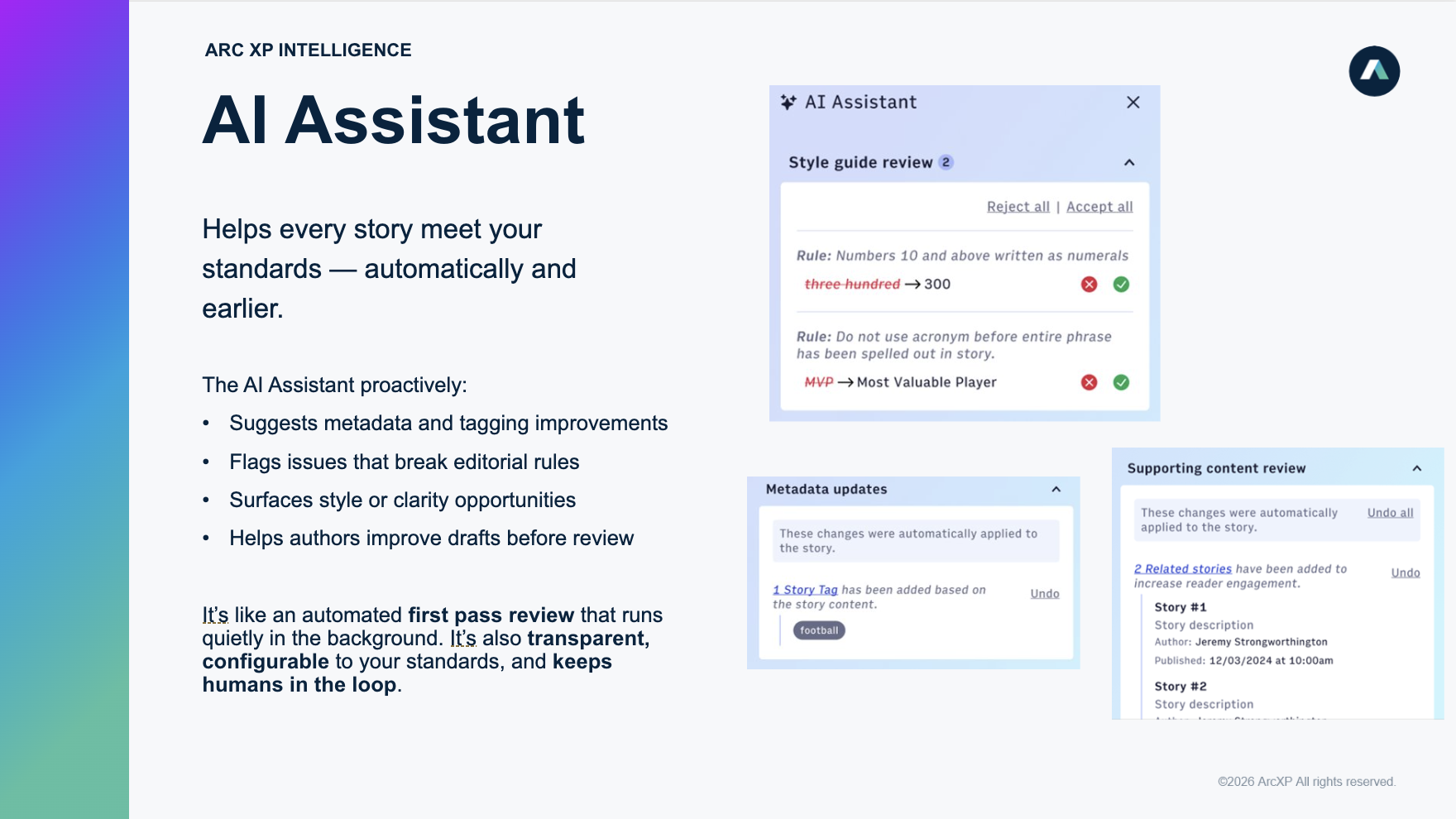
The AI Assistant will update a subset of fields in Composer automatically. This will respect the fields that are enabled or disabled as well as any customizations on prompts that already exist in Arc Intelligence. These automatic modifications will only be made in additive ways or if the fields are empty upon save.
For example: If SEO keywords is not used in Composer, SEO keywords won’t be generated and if there are customizations to the Headlines prompt in Arc Intelligence Settings, the AI Assistant will refer to those instructions.
Available metadata the AI Assistant will interact with
- Working headline
- Tags
- Description
- SEO keywords
Related Content, Featured Media and Vector Search with AI Assistant
The AI Assistant is also powered by vector search capabilities that can surface and add related content automatically to the story. This will work in the following sections in Composer:
- Related stories
- Featured Media
When the AI Assistant runs, it will automatically add up to five related stories based on relevance and one Basic featured media item. If either already exists or is at the maximum, the AI Assistant will not replace human-added content.
Style Guide Suggestions
The AI Assistant will also provide suggestions on the story body through Comments. On save, the AI Assistant will review the body against your style guide rules and provide:
- Context for why a piece of text does not meet style guide standards
- Suggestions an author can accept or reject in applying changes
- General spelling and grammar feedback
Customizing your Style Guide with AI Assistant
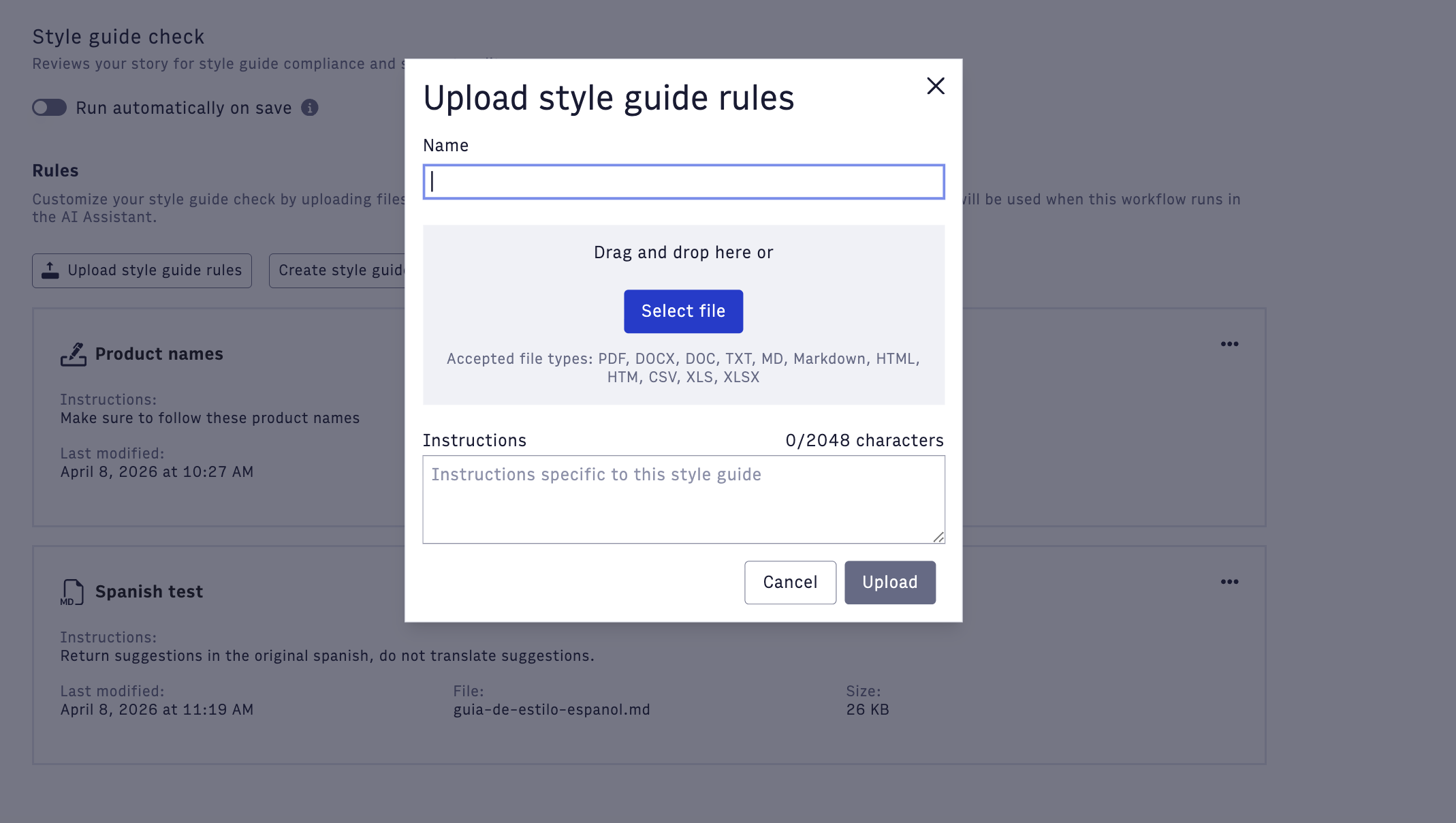
The AI Assistant uses your uploaded style guide or custom rules as the foundation for all suggestions. To get the most accurate and relevant results, your style guide should be as explicit as possible. If your publication follows specific language variants — such as Canadian or British spelling (e.g. colour, favour) — those preferences should be clearly documented. Don’t assume the AI will infer them. Spell them out either in your uploaded style guide or as custom rules and context added directly in the AI Assistant.
The more specific, the better. Vague guidance leads to vague suggestions.
Default Style Guide
Customers without an uploaded style guide will have our default style guide applied automatically. This will remain in place until you upload your own style guide or add custom rules.
Uploading Files and Adding Context
You can upload multiple files to build out your style guide, and add additional context directly in the AI Assistant to provide extra color or cover edge cases not addressed in your uploaded files. Use both together for the most complete coverage.
Using Style Guides in Other Languages
If your publication operates in a language other than English, make sure your story has a language applied in the Language field before running the style guide check. The AI Assistant will return suggestions in whatever language is selected.
Examples:
- Set the language to German + upload a German style guide → suggestions returned in German
- Leave language set to English + upload a non-English style guide → suggestions will still apply the style guide rules, but will be returned in English
Selecting the correct language ensures your suggestions are both accurate and actionable for your team.
Generating TTS Audio Articles
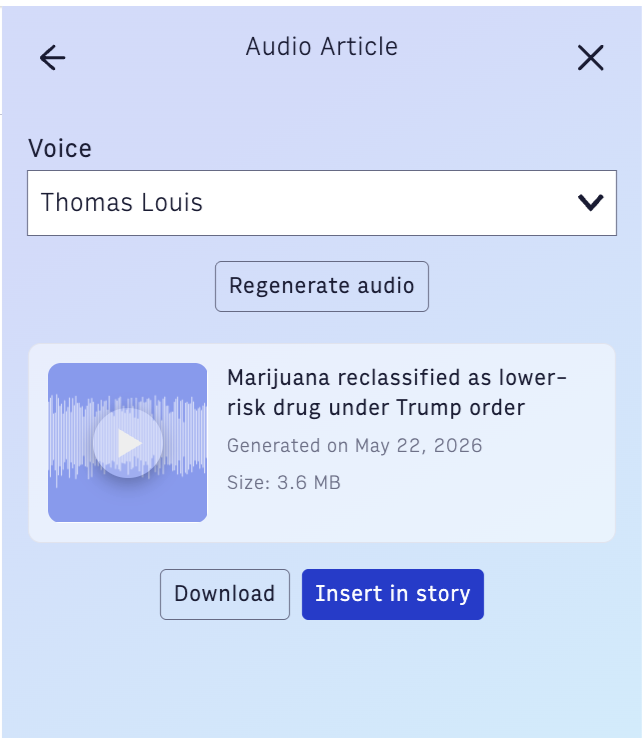
Composer integrates directly with Audio Center to streamline how you create and manage text-to-speech audio. When you generate a TTS file in Composer, it automatically uploads to Audio Center — no manual steps or embed codes required. From there, you can manage, search, and embed your audio assets just like any other file in the platform.
How to Generate TTS Audio on the AI Assistant
- Open a story in Composer and open the AI Assistant.
- Click Audio Article in the list of options.
- Click a voice to preview a sample of the article in that voice.
- Click Generate audio and wait while it processes the article (this might take a moment).
- Click Insert into Story to place the audio file where your cursor is currently located in the story body.
You now have a directly embedded audio asset on the story. When you make updates to the story you can regenerate the audio file, which will update in Audio Center automatically.
Translating Stories using the AI Assistant
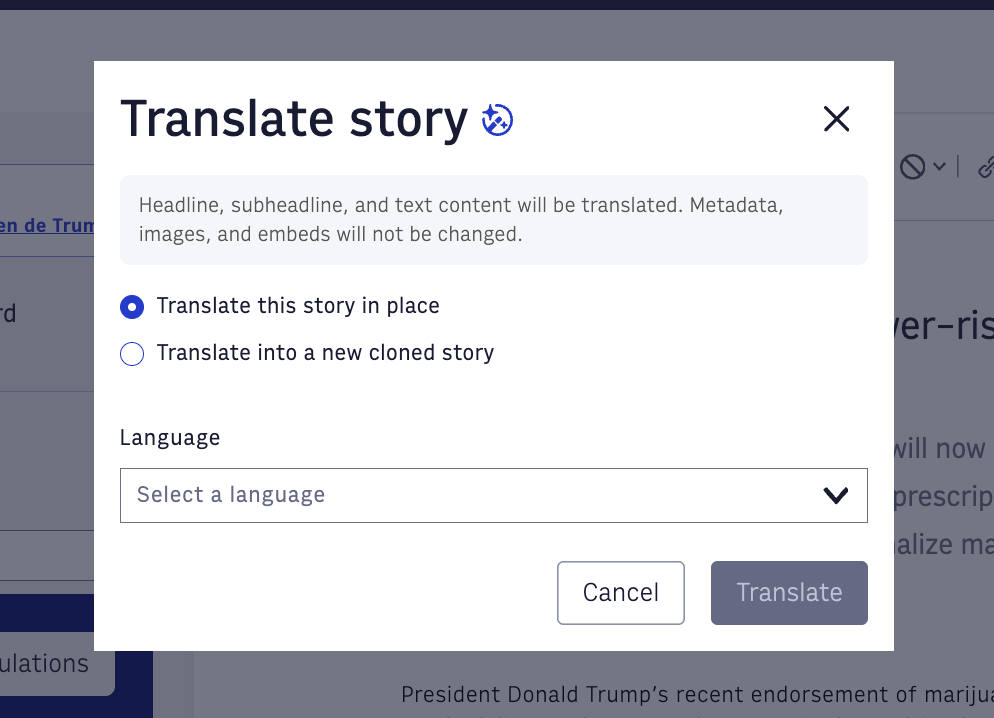
Composer includes a built-in translation tool that lets editors and producers translate story content directly within the platform. Headline, subheadline, and text content are translated automatically — metadata, images, and embeds remain unchanged.
How to Translate stories
-
Open a story in Composer and click the Translate option in the toolbar.
-
Choose your translation method:
- Translate this story in place — overwrites the existing story with the translated content.
- Translate into a new cloned story — creates a separate copy of the story with the translated content, leaving the original untouched.
-
Click a language in the Language drop-down menu.
-
Click Translate to begin. Composer will process and apply the translation automatically.
What to Know
- Headline, subheadline, and text content will be translated.
- Metadata, images, and embeds will not be changed.
- If you want to preserve the original story, use the cloned story option before translating.
Configuring the AI Assistant
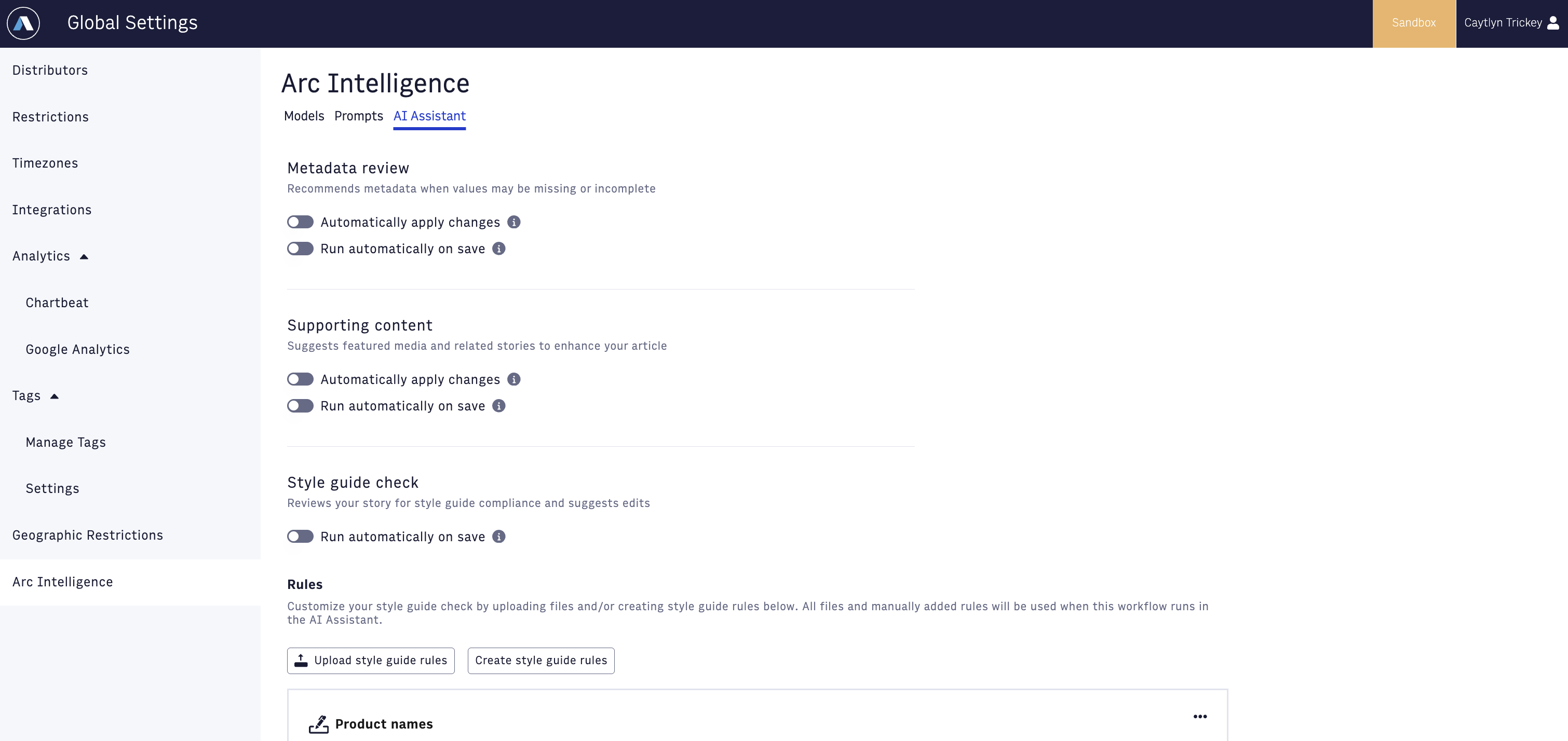
The AI Assistant can be configured to either make direct changes or apply suggestions on save. In Arc XP Global Settings, admins can go to Arc Intelligence > AI Assistant to access a toggle to enable or disable Automatic Metadata changes.
- When on → the AI Assistant will make direct changes to metadata fields in the story.
- When off → the AI Assistant will make suggestions that are only available in the AI Assistant sidebar for review.
Any suggested content does not persist after save or refresh.
Linking Custom AI Prompts to Composer fields
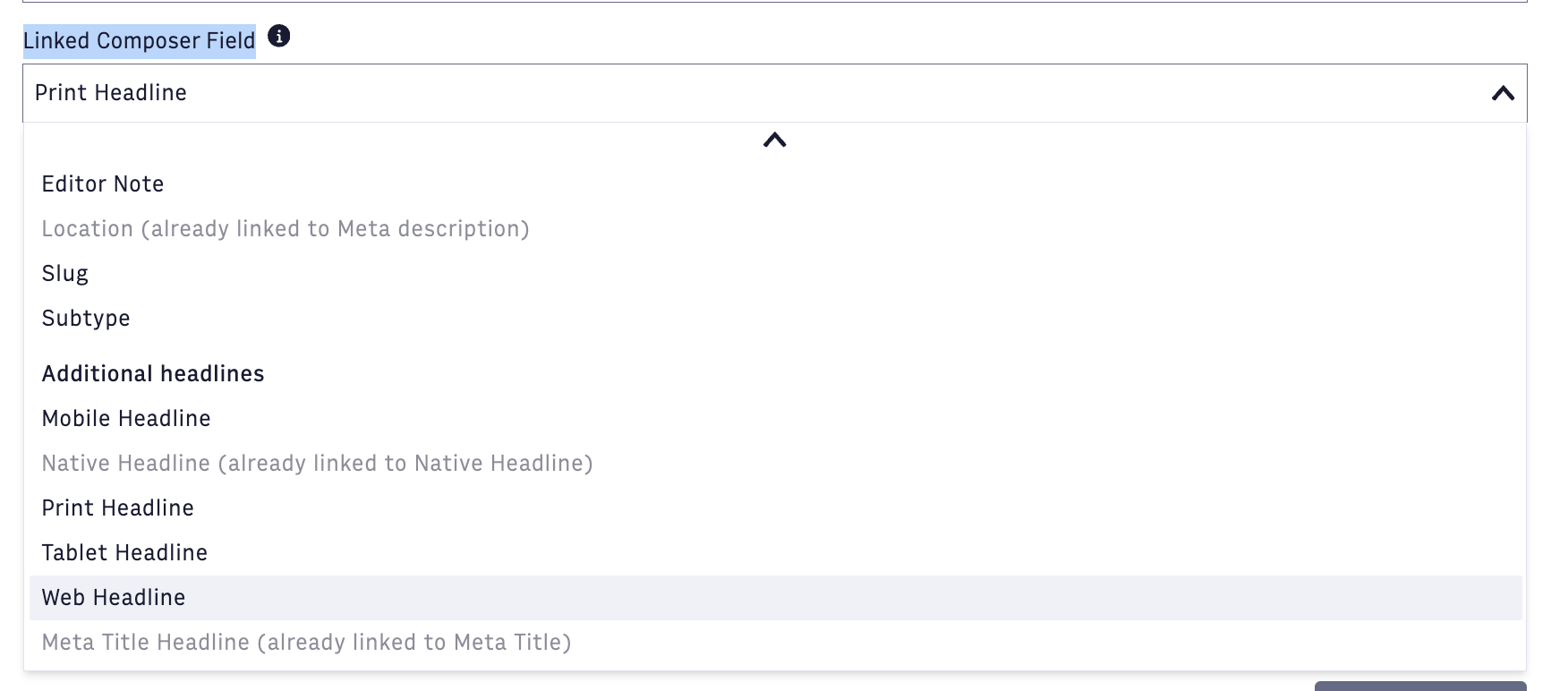
You can use Custom AI Prompts directly on Composer free-form fields that do not natively support AI out of the box.
- In Global Settings > AI Settings, the Linked Composer Field lists available Composer fields so users can run Custom Prompts on fields we don’t natively support AI on directly.
- From Composer, when a custom prompt has been linked to a field users will now be able to see an AI icon on the field and run the custom prompt to return a result.
How will the AI Assistant interact with a story?
The AI Assistant will be run on save and interact with stories in two different ways:
- Automatically applied data
- Suggestions that require a human to accept or reject
Automatically applied data (when enabled)
These will only be run automatically if any of this data is not currently filled out or if it doesn’t meet standards that are defined in the prompts. We will not overwrite any human-created data, only add to existing data. On save, the AI Assistant will evaluate the fields and if additions are needed it will show an indicator on the field being modified so the user can see that the AI is working on a particular area.
- Working headline
- Tags
- Description
- SEO keywords
- Related Stories
- Featured Media
These will only ever be automatically applied to a story when your organization has enabled automatic metadata changes in Global Settings > Arc Intelligence > AI Assistant.
For example: If an author has headlines, related items, and featured media filled out, then the AI Assistant will not modify those fields. But if a customer set up in their Tags prompt that they always want to ensure there are 7 tags associated and the user only had 3, then the AI Assistant will add 4 more tags that the user can then review.
Suggestions with Human Review
When Automatic Metadata changes are off → the AI Assistant will make suggestions that are only available in the AI Assistant sidebar for review. This will apply for the same fields listed above for: Working headline, tags, description, SEO keywords, Related Stories, and Featured Media.
Style guide suggestions will be placed as comments in the story body. None of the AI Assistant’s feedback changes the story body until a user expressly takes action to accept or reject.
If a user does not act on suggestions provided and clicks Save, the suggestions will not be persisted. Any new style guide suggestions would be added the next time the AI Assistant analyzes the story.
How often will the AI Assistant run?
The AI Assistant can be triggered automatically on save, but it has a cooldown and content thresholds built in so we don’t needlessly make calls on content that hasn’t changed or on saves made in quick succession.
Our current thresholds for the AI Assistant to be run are as follows:
- 500 characters minimum in story
- At least 10% change in story since last save
- At least 200 characters changed
- At least 3 seconds since last run
How can I customize what the AI Assistant evaluates?
The AI Assistant can be configured in a few ways:
- The prompts that it references for metadata review (headlines, tags, description, SEO keywords)
- Style Guide uploads catered to your organization’s editorial writing styles
- AI Assistant Settings section in Global Settings.
Prompt Management: The AI Assistant will defer to the prompts that exist in Arc Intelligence and the fields that are enabled or disabled from Composer Settings.
Arc Intelligence Settings in Global Settings: Admins can currently configure how the AI Assistant will run metadata suggestions. When “Automatically apply changes” is toggled on, the AI Assistant will automatically apply changes to the metadata. When disabled, it will provide suggestions for users to review and approve or reject. Users can additionally choose to run specific workflows on save automatically or just run manually.